

Some people use “shadow self” as a way to talk about feelings or habits they’d rather keep out of view. It can be a useful prompt for reflection if it helps you look at one experience with curiosity. Loneliness, sadness and a need for help deserve care in their own right.

Start with one moment you can describe
Pick an ordinary example. Perhaps you snapped when someone asked you to take on another task. Write down what happened, what you felt and what you did. You can take responsibility for the reaction while asking what made the request so hard to hear.
Ask what the feeling was telling you
Anger might point to a limit you’ve been reluctant to name. Envy might show you something you’d like more of in your own life. Consider more than one explanation and check each against what you observed.
Choose a specific response for next time
If you tend to agree and then resent the extra work, try “I need to check my other commitments first.” If you hurt someone, you can acknowledge what you did and ask what would help repair it.
Share only what you want to share
Write privately or speak with someone you trust if you’d like another perspective. If an exercise brings up more than you can comfortably handle, pause. A qualified mental health professional can help you decide how to approach distressing memories or patterns.
Read the infographic in text
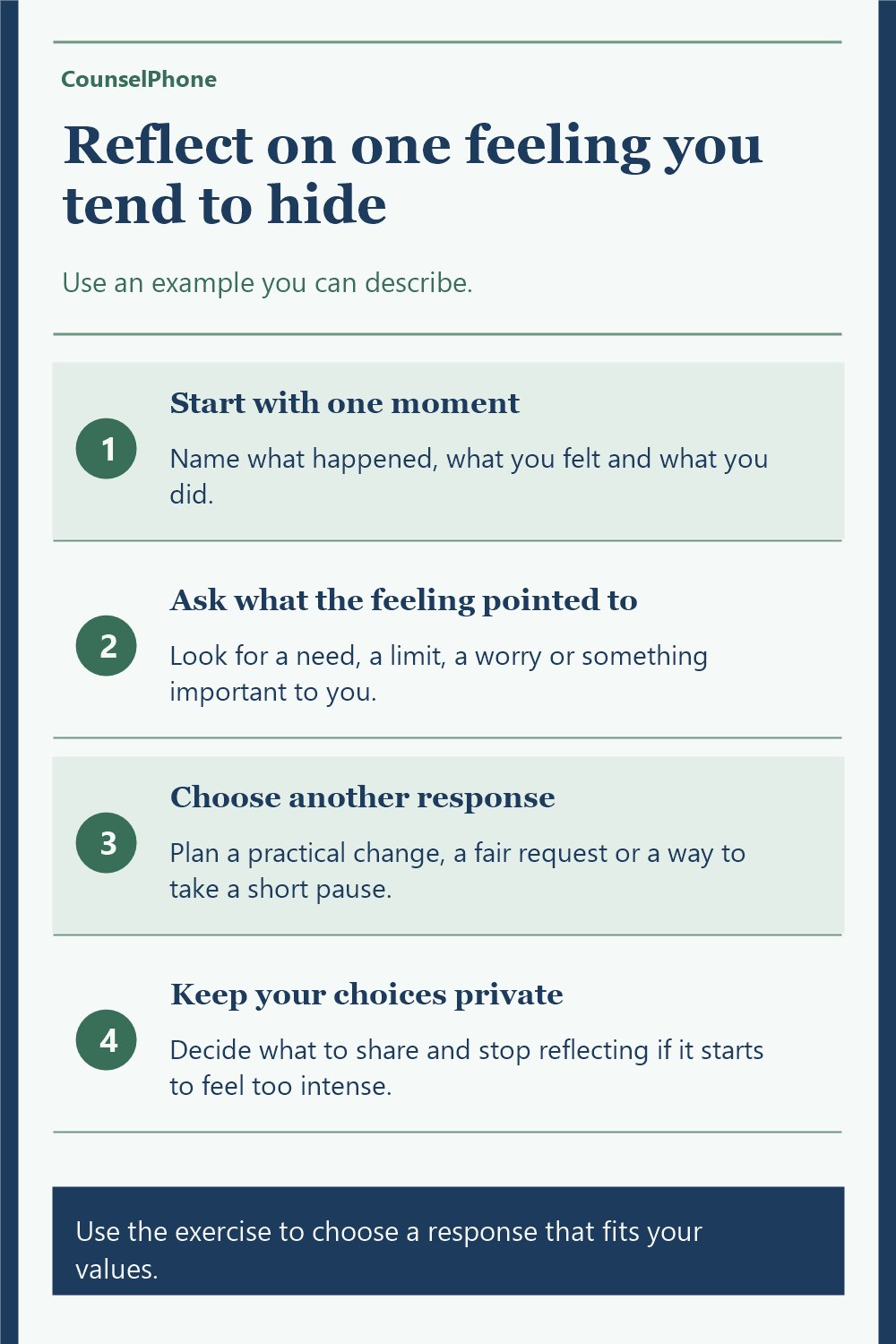
Reflect on one feeling you tend to hide Use an example you can describe.
- Start with one moment Name what happened, what you felt and what you did.
- Ask what the feeling pointed to Look for a need, a limit, a worry or something important to you.
- Choose another response Plan a practical change, a fair request or a way to take a short pause.
- Keep your choices private Decide what to share and stop reflecting if it starts to feel too intense.
Use the exercise to choose a response that fits your values.