
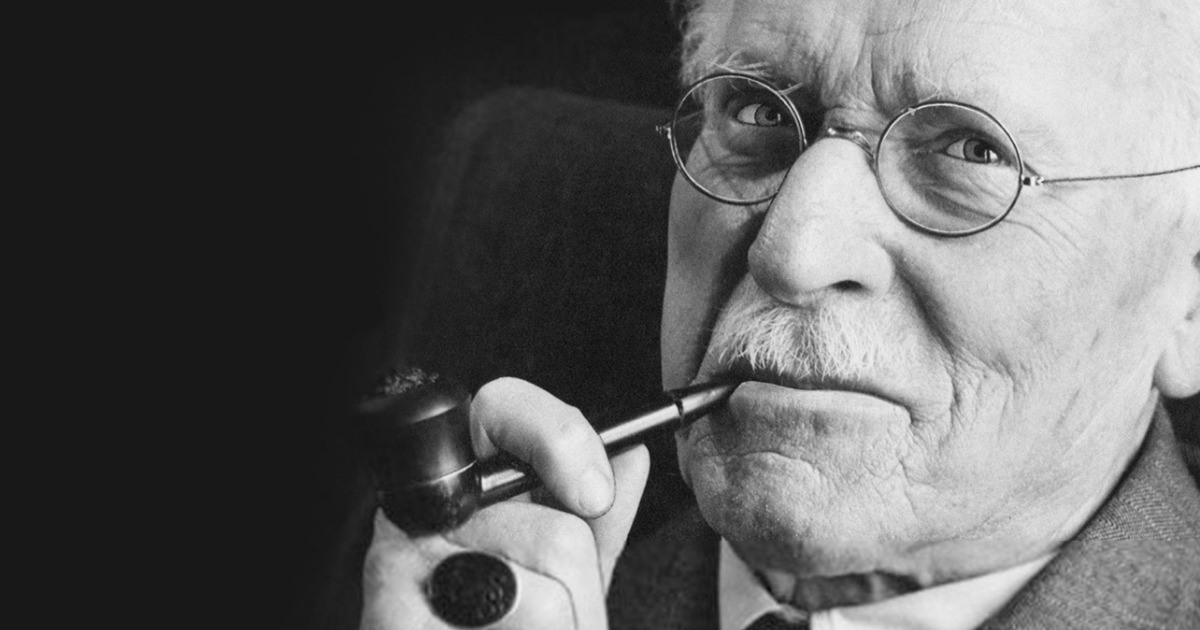
Carl Gustav Jung was born in Switzerland in 1875. He trained in medicine, worked in psychiatry and developed analytical psychology after his break with Sigmund Freud. The Library of Congress exhibition on Jung’s Red Book traces that period and his interest in dreams, religion and symbolism.
What Jung meant by archetypes
Jung proposed that recurring patterns in myths, dreams and art reflect common human concerns. He called these patterns archetypes and used the term collective unconscious for the shared layer of the psyche he believed they came from. The Library of Congress overview of his cultural legacy explains how these ideas influenced writers and artists.

What the shadow can help you reflect on
Jung used shadow for parts of the personality a person struggles to acknowledge. In everyday reflection, you might notice that you rarely ask for help, then ask what you learned about needing others. Look at the circumstances and your own experience before deciding what a pattern means.
Using a dream or a card as a prompt
Some people work with dreams, tarot or astrology as symbolic practices. If an image stays with you, write down the detail you remember and what it brings to mind in your life. For example, a closed door might remind you of a decision you’ve been putting off. Your associations may change as you learn more about the situation.
Use the reflection to choose a small action or start a conversation. If the material brings up distress that interferes with daily life, consider discussing it with a qualified mental health professional.
Related reading: Tarot and the Cosmos: Using the Star as a Reflection Prompt.
Read the infographic in text
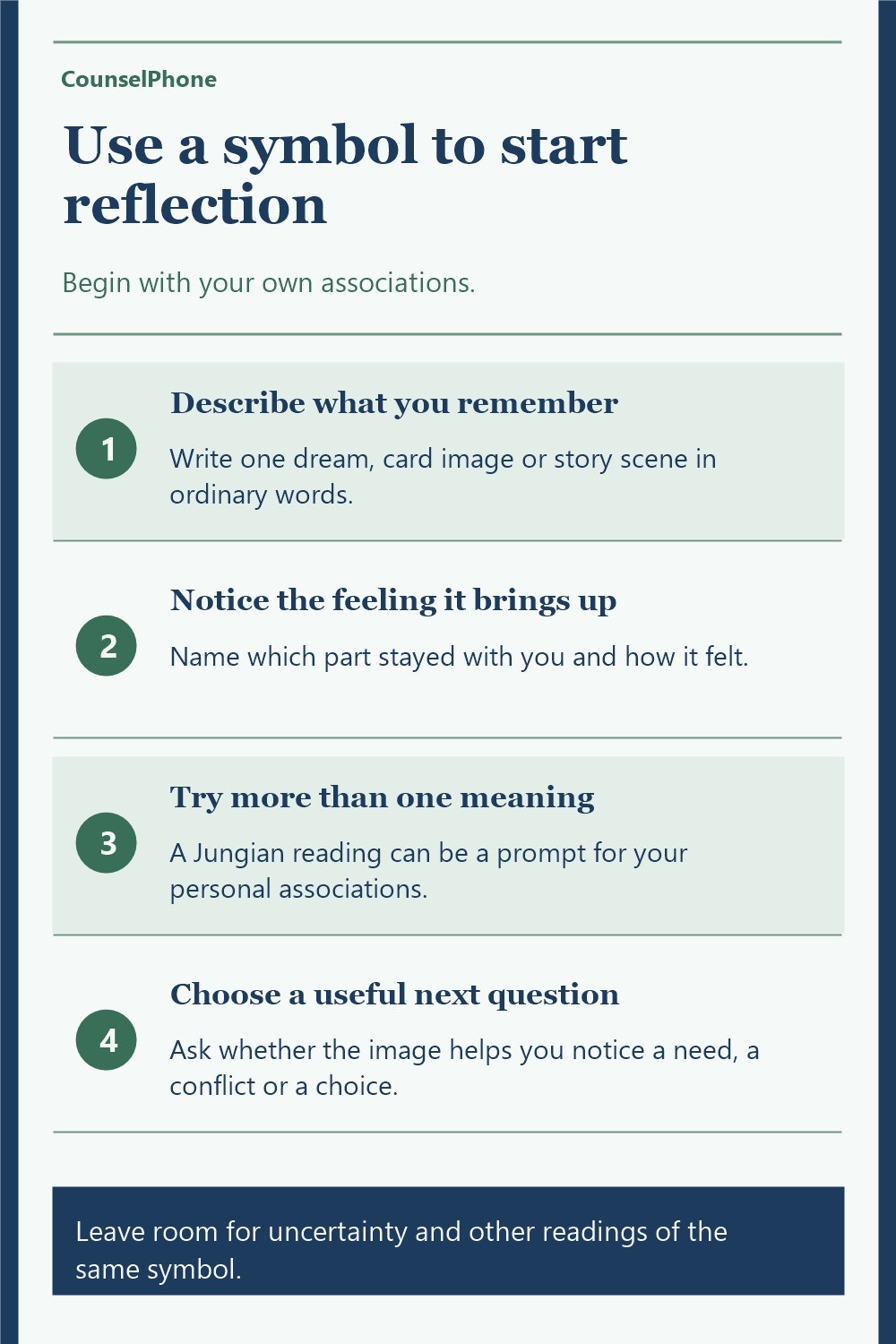
Use a symbol to start reflection Begin with your own associations.
- Describe what you remember Write one dream, card image or story scene in ordinary words.
- Notice the feeling it brings up Name which part stayed with you and how it felt.
- Try more than one meaning A Jungian reading can be a prompt for your personal associations.
- Choose a useful next question Ask whether the image helps you notice a need, a conflict or a choice.
Leave room for uncertainty and other readings of the same symbol.