

Your first therapy call is a chance to ask how a provider works and decide whether their approach and practical arrangements fit. Start with the questions that would affect whether you book.
Find out what the call is for
Ask when you book whether the call is a short consultation, an intake or a paid clinical appointment. Confirm the time available, whether there’s a fee and what information the provider needs beforehand.
Bring one sentence about what you want help with and two or three priority questions. For example, “I’ve been avoiding things because I feel anxious, and I’d like to understand how you work with that.” Ask how they use information shared before you decide how much detail to give.
Ask about qualifications and approach
Ask what credential the provider practises under and how to verify their licence or registration where applicable. If your visit will be remote, ask whether they can provide services where you will be physically located. Rules and professional titles vary by jurisdiction.
Ask what they typically do in the first few appointments and how you will set goals together. The NIMH overview of psychotherapies includes questions about choosing a provider and discussing treatment options.
Ask about confidentiality and its limits
Try “Who can access what I share? When might you be required or permitted to share it?” Ask the provider to explain which rules apply to you, especially if you’re a minor or care involves someone else. Laws and exceptions vary. Ask what goes in the clinical record and how you can request information about it.
You may also want to know what a bill, insurance claim or portal notification can reveal to others. Ask the practice what it sends and direct insurance questions to the plan. If you’re relying on someone else’s insurance, ask about any privacy options available before scheduling.
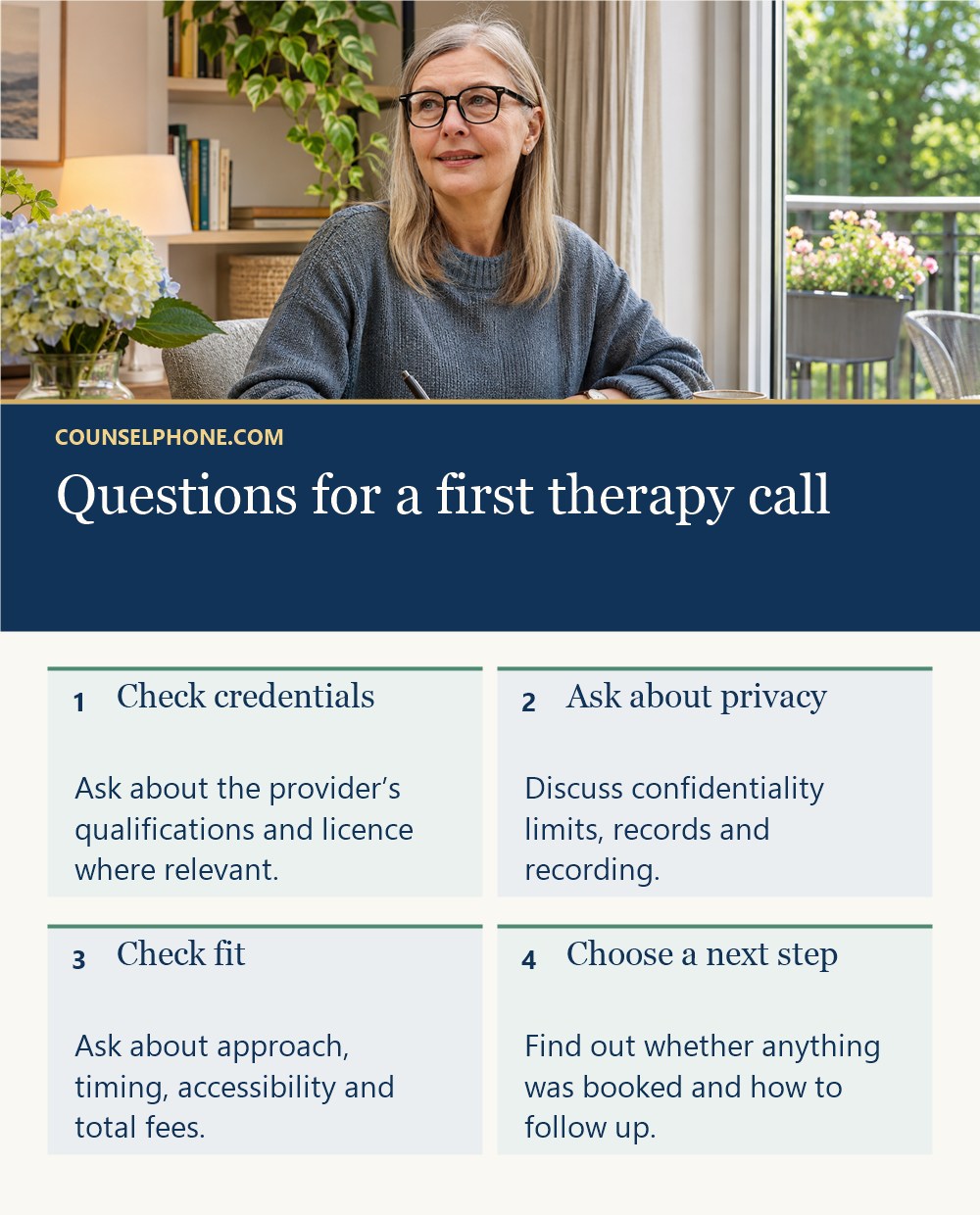
Read the visual guide as text
- Check credentials. Ask about the provider’s qualifications and licence where relevant.
- Ask about privacy. Discuss confidentiality limits, records and recording.
- Check fit. Ask about approach, timing, accessibility and total fees.
- Choose a next step. Find out whether anything was booked and how to follow up.
Discuss remote visits, recording and AI tools
Ask which platform you would use, whether anyone else can enter the session and what happens if the connection drops. Pick a private location you can use consistently if one is available. HHS guidance on telehealth privacy gives patients practical questions about protecting their information.
Ask whether the call or future sessions are recorded, transcribed or processed by an outside service. If the practice uses AI for notes, ask what information goes into the tool, who can access it and what choices you have about its use.
Check practical fit and total costs
Ask about session length, fees, billing, cancellations, availability and any sliding fee or payment options. If the office says it accepts insurance, contact the plan to confirm your own coverage and obligations. Ask whether accessibility, language or scheduling needs can be accommodated.
Ask how to contact the practice between sessions and what kind of response you can expect. If you need urgent support, ask about the correct service for that situation. A routine consultation may be the wrong way to reach someone in an emergency.
Decide the next step before you hang up
Suppose a provider’s approach sounds useful and evenings would work, but you’re unsure what information the platform stores. Ask for the written privacy policy and a follow-up contact before you choose a time.
Finish by confirming whether an appointment has been booked, what you will pay and what you need to bring. You can say “I’d like to look at my options and get back to you on Friday.” If the fit is uncertain, ask about referrals or another way to reach qualified care.
Related reading. How to Find Licensed Mental Health Help You Can Afford.
Frequently asked questions
1. What should I ask at my first therapy consultation?
Ask about credentials, the kinds of concerns they work with, their approach, confidentiality, costs and how to book or cancel.
2. Do I have to share my whole history on the first call?
Share enough to describe what you are looking for. Ask how the call is handled and decide which details you want to discuss during an appointment.
3. What should I ask about telehealth privacy?
Ask which platform is used, who can enter the session, whether anything is recorded or transcribed and how records are kept.
4. How do I find out what therapy actually costs?
Ask about the fee, session length, payment options, cancellation charges and any planned costs between sessions. Confirm insurance coverage directly with your plan if applicable.
5. What if the therapist doesn’t feel like a good fit?
You can take time to decide, ask for a referral or speak with another qualified provider. Discuss continuity of care if you have an urgent or ongoing need.