

When you’re about to speak up, a thought like “I’ll sound foolish” can take over. A short meditation can give you a chance to notice the thought and practise returning your attention to something steady.
Try a short pause
Sit somewhere comfortable and notice the weight of your feet or the sounds in the room. When a self-critical thought comes up, try naming it simply: “I’m worried I’ll get this wrong.” Then bring your attention back to your feet or what you can hear. You can keep your eyes open and stop whenever you like.
Choose one action you can practise
After the pause, decide what you want to do. You might ask one question in a meeting, say you need another day to decide or write down what you want to bring up with a friend. Later, note how it went. That gives you something specific to learn from next time.
Adjust the practice to how you feel
Meditation can be uncomfortable or make difficult thoughts more noticeable for some people. If sitting quietly makes you feel worse, try a short walk, look at a familiar object or talk with someone. The National Center for Complementary and Integrative Health summarises what is known about meditation’s effects and safety.
For a practical next step, see how to speak up when you feel nervous.
Read the infographic in text
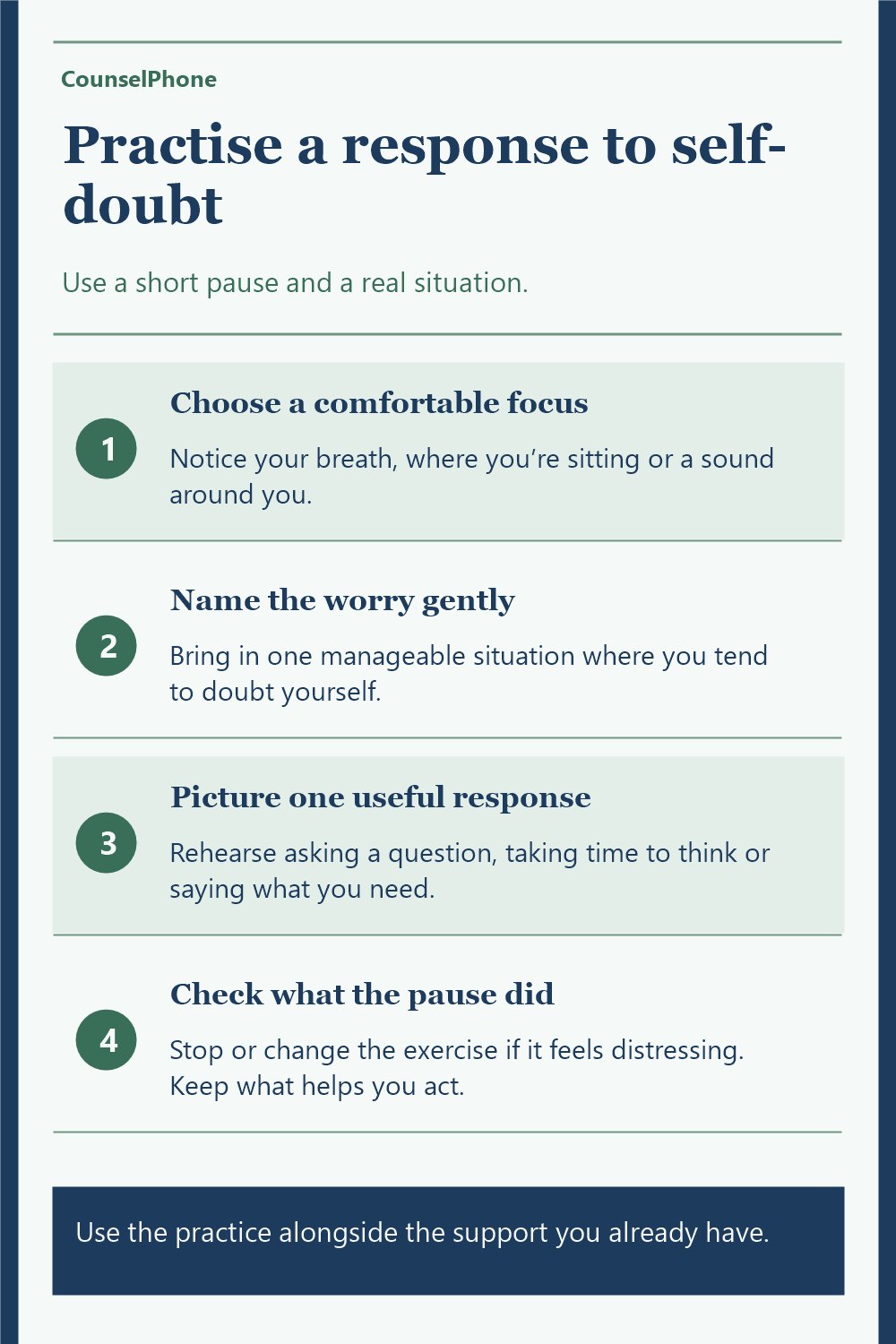
Practise a response to self-doubt Use a short pause and a real situation.
- Choose a comfortable focus Notice your breath, where you’re sitting or a sound around you.
- Name the worry gently Bring in one manageable situation where you tend to doubt yourself.
- Picture one useful response Rehearse asking a question, taking time to think or saying what you need.
- Check what the pause did Stop or change the exercise if it feels distressing. Keep what helps you act.
Use the practice alongside the support you already have.