

If life has drifted away from the plans you once made, start by looking at what you want more of now. One small experiment can help you decide whether to spend more time on an interest, change a routine or ask someone to join you.
On this page

Learn one small skill
Choose an interest that fits the time, money and energy you have. A library book, a free class or a short practice session gives you something concrete to try. Pick a first step you can finish in half an hour.
Try a different route
When I was in college, a new friend told me to put away the GPS and be willing to get a little lost on my way home. I found back roads, shops and sweeping views I’d missed on the way to my rental house. You can try a similar experiment close to home, with a route and a way back you feel comfortable using.
Make room for a break at work
If a workday feels monotonous, try a short change of pace. Walk outside at lunch or ask whether coworkers want a shared puzzle at break time. Keep group activities optional and check what works for everyone’s schedule and access needs.
Make something without judging it
Choose a project small enough to start with what you have. Mend a seam, write a page, try a sketch or read a short story and jot down what stayed with you. The first attempt can help you decide whether you’d like to do it again.
Change one everyday routine
Try a new library audiobook, talk with a colleague you rarely see, or take lunch somewhere different. If a change needs extra money, travel or childcare, choose a smaller version that fits this week.
Plan a surprise together
Write down a few low-cost activities you would both enjoy and put the slips in a jar. Take turns drawing one, then agree on a time. Leave room to swap the idea if either person’s plans or energy change.
Offer help you have time to give
Ask someone what would help before assuming what they need. You might bring a meal, make a call or volunteer for a single shift. A clear offer and a time limit make it easier for both of you to plan.
Keep the changes that fit
After a week, ask what you enjoyed, what drained you and what you want to repeat. Keep the one change that made a difference and let the others go. You can revisit a bigger goal after you’ve had time to learn from the smaller one.
When evenings all feel the same
Imagine you scroll on the sofa when you get home, then feel restless. Twice this week, try walking around the block before sitting down if that feels practical. On another day, put on a favourite album instead.
Notice energy, enjoyment and barriers like weather or transport. Adapt the experiment to your circumstances and keep the part you look forward to.
Read the infographic in text
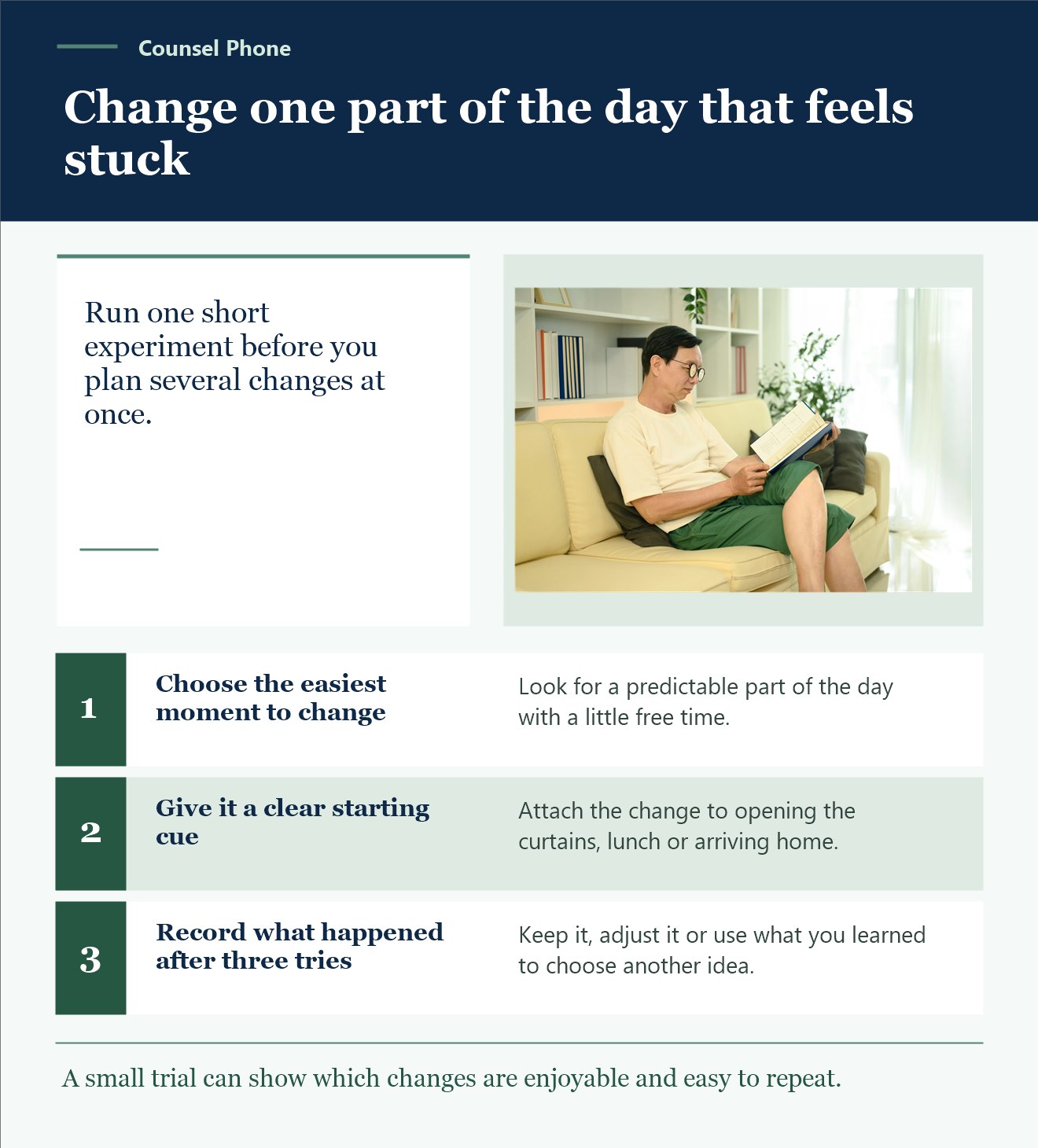
Change one part of the day that feels stuck
Run one short experiment before you plan several changes at once.
- Choose the easiest moment to change Look for a predictable part of the day with a little free time.
- Give it a clear starting cue Attach the change to opening the curtains, lunch or arriving home.
- Record what happened after three tries Keep it, adjust it or use what you learned to choose another idea.
A small trial can show which changes are enjoyable and easy to repeat.