

Start by naming the pressure you can actually change this week. A busy day, an overdue bill and a difficult conversation call for different responses. Choose one idea that fits your time and energy.
Reduce the demands you can change
- Work on one task. Pick the next visible step and silence notifications you can safely miss for ten minutes.
- Revisit one commitment. Ask what can move, be shared or wait until next week.
- Leave extra travel time when possible. If arriving early is unrealistic, tell the person waiting when you expect to arrive.
- Make one area easier to use. Clear enough space to sit, cook or find the thing you need.
- Take one step on a money worry. Write down a due date, check a balance or ask the provider about options. Only automate bills if it suits your cash flow.

Make room for support and recovery
- Move in a way that suits you. A short walk, a stretch or a change of position may be enough.
- Meet one basic need. Make food, get a drink or take a break if you’ve been putting it off.
- Choose a quiet pause. Try sitting outside, reading or taking a shower.
- Do something for enjoyment. Play a song, draw or spend a few minutes with someone you like.
- Ask for specific help. Name a task or decision you could use help with. If stress keeps disrupting daily life, consider talking to a qualified health professional.
For a next step, read eight ways to change a routine that feels stuck.
Change the part of a task that causes the most pressure
If a deadline regularly causes you to miss meals and rush, write down what blocks you before the last hour. You might ask a colleague for a needed file a day earlier or set a time when you can share unfinished work.
Notice what actually changed in the next week. If persistent stress affects your health or daily life, consider support from a qualified professional.
Read the infographic in text
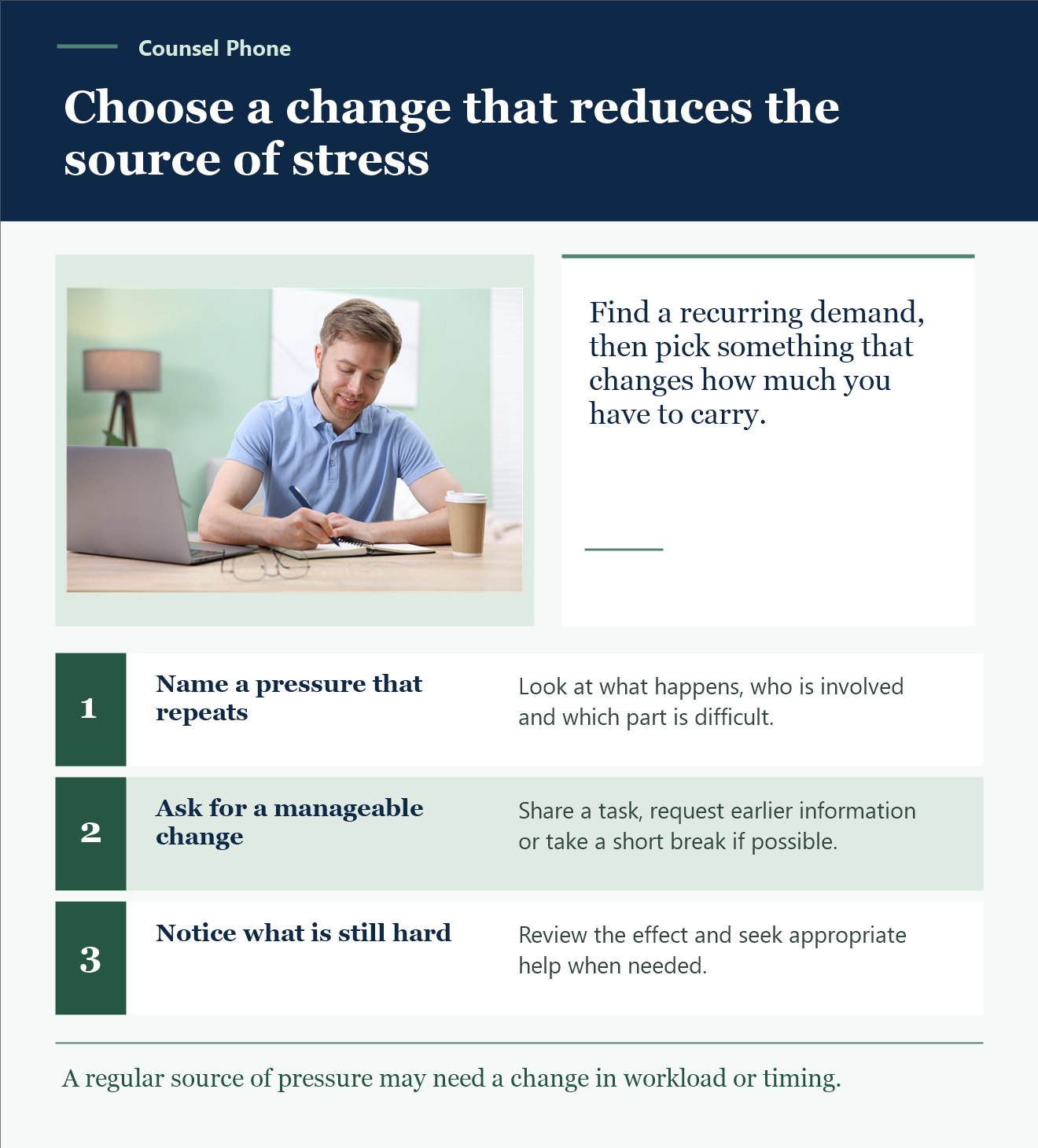
Choose a change that reduces the source of stress
Find a recurring demand, then pick something that changes how much you have to carry.
- Name a pressure that repeats Look at what happens, who is involved and which part is difficult.
- Ask for a manageable change Share a task, request earlier information or take a short break if possible.
- Notice what is still hard Review the effect and seek appropriate help when needed.
A regular source of pressure may need a change in workload or timing.